

What vinyl ester resin is used for
 Oct 19, 2026|
 View:73
Vinyl ester resin serves industries that demand exceptional corrosion resistance, mechanical strength, and reliable performance in harsh environments. Marine builders, chemical processors, and construction teams depend on this material for tanks, pipes, hulls, and structural parts. Global demand reflects this trust. The market reached USD 479 Million in 2025 and experts project USD 900 Million by 2035, growing at 6.5% annually from 2027 to 2035. Marine and wind energy show the fastest growth. This article examines the main types of vinyl ester resin and the industries that rely on it.
Key Takeaways
Vinyl ester resin resists corrosion and holds up in harsh environments.
Bisphenol-A grades handle general corrosion; novolac grades resist strong chemicals and heat; brominated grades add fire safety.
Industries use vinyl ester resin for boat hulls, chemical tanks, pipes, and structural parts.
The resin works with many processing methods, including hand lay-up and filament winding.
Choose the right grade for your project to ensure long service life and reliable performance.
Types of vinyl ester resin
Bisphenol-A epoxy vinyl ester
Bisphenol-A epoxy vinyl ester forms the backbone of most general-purpose corrosion work. Manufacturers produce it by reacting bisphenol-A epoxy resin with methacrylic acid. The result is a resin that resists acids, alkalis, salts, and organic liquids while keeping strong mechanical properties. A typical grade carries 45% styrene and delivers a tensile modulus of 1.12 GPa in pure resin form. Flexural strength reaches about 47.7 MPa. These values explain why the material outperforms epoxy and polyester in cost-effectiveness and impact resilience.
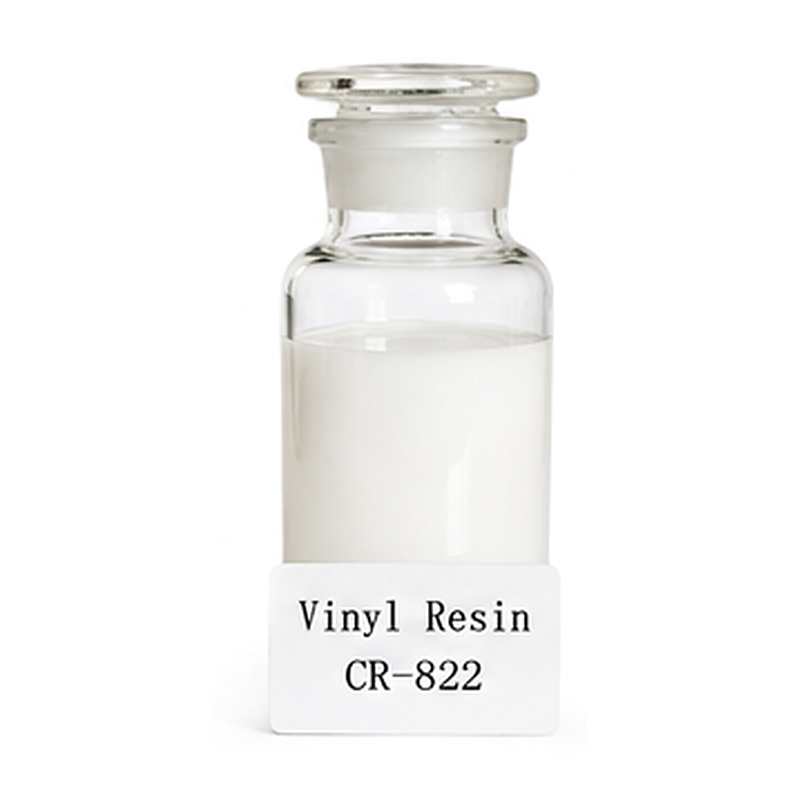
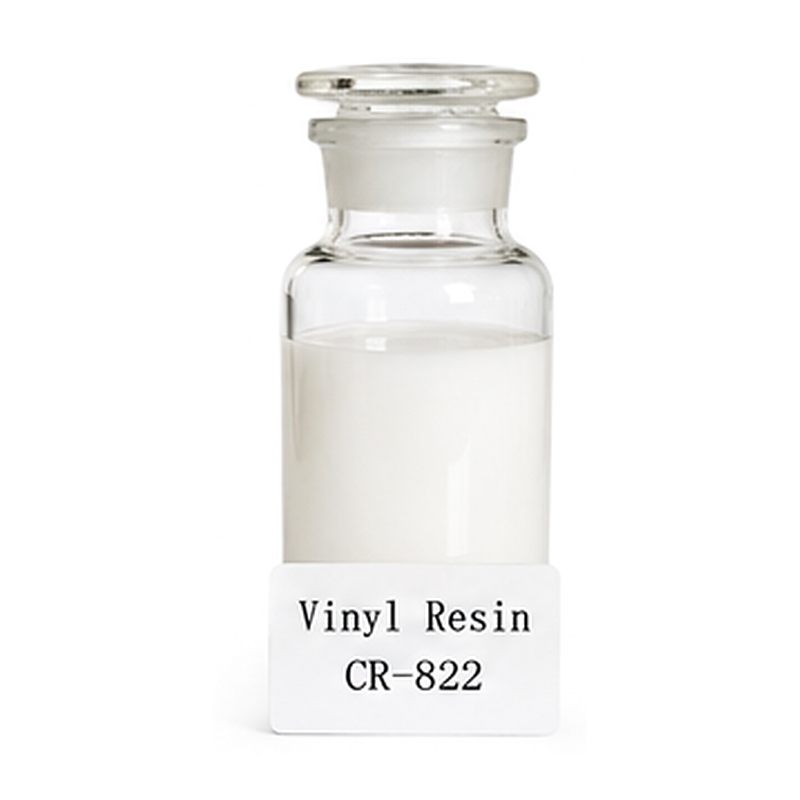
The Rixin CR-822 Epoxy Vinyl Ester Resin shows how a finished product looks. This bisphenol-A epoxy vinyl ester resin uses methacrylic acid modification and meets demanding chemical engineering needs. Its key specifications appear below.
Property | Value |
|---|---|
Viscosity at 25°C | 450–550 mPa·s |
Acid value | 10 mgKOH/g |
Styrene content | 45% |
Curing system | MEKP at 15–30°C |
Rixin also offers customization to match project requirements and provides technical guidance for construction. Builders can therefore specify the resin around their actual service conditions.
Novolac and brominated vinyl ester
Novolac vinyl ester resin adds a denser crosslink structure. It suits environments where standard bisphenol-A grades would degrade, such as high-temperature chemical service. Brominated vinyl ester takes a different path. Manufacturers incorporate brominated epoxy, often through tetrabromobisphenol-A, into the formulation. Bromine becomes part of the resin structure and provides inherent flame resistance. The material inhibits flame spread and reduces smoke generation while keeping mechanical strength, adhesion, and chemical resistance. Electrical laminates, printed circuit boards, fire-rated coatings, and construction composites commonly rely on this grade.
Each formulation serves a distinct purpose. Bisphenol-A handles broad corrosion duty, novolac handles aggressive chemical and thermal loads, and brominated grades handle fire safety. Matching the grade to the environment matters more than picking the highest specification.
Marine and chemical applications
Boat hulls and yachts
Water exposure tests a hull every day of its service life. Vinyl ester resin answers that test with low water absorption, typically under 0.5% by volume, which prevents hydrolysis in humid and submerged conditions. Osmotic blistering below the waterline drops by roughly 70% compared with polyester resins. Elongation at break of 3–5% lets a hull absorb impacts from floating debris without cracking.
The Balance 502 catamaran shows how builders apply this material. The builder switched the entire hull's resin system to full vinyl ester. A stronger resin enabled lighter laminate schedules throughout the hull. The finished hull came out both stiffer and lighter at the same time. Fiberglass boatbuilding adopted these resins as a less expensive alternative to epoxy while offering similar properties. That cost-performance balance supports their role in hulls, yachts, and sailboats. Gas tanks and other parts exposed to water or chemicals long-term also benefit from the same resistance profile. UV-stable gelcoats extend the approach to deck fittings, hatches, handrails, storage lockers, and lifeboat components.
Marine requirement | Performance evidence |
|---|---|
Water resistance | Superior saltwater and osmosis resistance; low water absorption |
UV stability | UV-stable gelcoats for deck fittings and functional parts |
Mechanical support | High tensile strength, impact resistance, adhesion to glass and carbon fibers |
FRP tanks and piping
Chemical processors face aggressive media, corrosive gases, and elevated temperatures. Vinyl ester resin has become the standard choice for FRP tanks in these conditions. The material resists strong acids, including sulfuric acid up to 98%, along with hydrochloric and phosphoric acids. It also handles strong alkalis, oxidizers such as sodium hypochlorite and hydrogen peroxide, hydrogen sulfide and sewer gas, and brine solutions. Typical tensile strength reaches 70–90 MPa, and heat distortion temperature runs 100–150°C. Elongation of 3–6% makes laminates more flexible and resistant to microcracking under thermal cycling. Service life in corrosive environments often exceeds 25 years.
Designers treat the corrosion barrier as the primary defense. A resin-rich veil layer provides the first line of resistance, while the structural laminate carries mechanical loads. Vinyl ester suits anti-corrosion linings, storage tanks, and pipelines described in the Rixin CR-822 product information. Compatibility depends on the exact chemical, its concentration range, and the operating temperature profile. Oxidizers and solvents demand special caution, and no blanket safety claim holds. Engineers confirm each tank and piping item against its real process conditions before specification.
Construction and infrastructure uses
Builders specify vinyl ester resin wherever concrete and steel meet salt, chemicals, and constant moisture. Bridges, seawalls, and roads treated with deicing salt all face steady attack. Flooring systems and concrete coatings face the same pressure indoors. Vinyl ester linings and composite parts share one trait: they keep their properties when water and chemicals attack. The material earns its place in both protective layers and load-bearing composites.
Corrosion-resistant linings and coatings
A lining must bond tightly and stay impermeable. Glass flake reinforced novolac vinyl ester linings show how the chemistry performs on real substrates. Bond strength to steel exceeds 10 MPa under ASTM D4541. On properly prepared concrete, cohesive failure occurs in the concrete itself, 4–10 mm below the primed surface. Moisture vapor transmission stays low at 2.75 × 10⁻⁵ perm inches (ASTM D1653). Abrasion loss measures 216 mg under ASTM D4060-10 at 1 kg load over 1000 cycles with H18 wheels. Elongation reaches 6% as a free film and stays above 1.2% over laminate.
These linings resist full immersion across pH 1–14, including sulfuric, hydrochloric, nitric, and hydrofluoric acids plus sodium hydroxide and hypochlorite. Documented jobs include a neutralization sump dosed with 98% sulfuric acid and sodium hydroxide, and a urea secondary containment lining with a nonskid topcoat. Hydrofluoric acid service calls for graphite flake filled novolac instead of glass flake. Concrete work depends on deep primer penetration and enough elongation to absorb cyclical stress without cracking. Vinyl ester resin is forecast to grow at 6.73% annually through 2031, the fastest rate among corrosion protection coating resins.
Trowel-applied resin flooring brings the same chemistry to heavy-duty floors. These systems tolerate continuous service up to 250°F and thermal shock from -40°F to 230°F. Compressive strength runs 10,000–15,000 psi, and abrasion loss drops 30–40% below standard epoxy in Taber testing. These floors resist acetone, MEK, toluene, and xylene along with concentrated acids and sodium hydroxide. Chemical plants, electroplating lines, battery factories, pulp mills, and pharmaceutical suites all rely on this flooring. Service life typically spans 15–25 years, and the seamless surface supports GMP-compliant and ESD-capable cleanrooms.
Structural composites and reinforcements
Fiber-reinforced polymer parts built with the resin matrix bring several practical gains to infrastructure:
The material does not rust, so seawalls and coastal structures keep their strength far longer.
GFRP weighs roughly four times less than steel, which cuts transport and labor costs.
Tensile capacity reaches about twice that of steel, allowing thinner structural designs.
Lifecycle savings offset the higher initial price through lower maintenance.
The composite stays non-conductive and non-magnetic, which suits sensitive sites.
Longer service life and recyclability reduce material waste.
High bonding strength improves structural efficiency in concrete reinforcement. Thermal stability keeps performance steady as temperatures swing. The matrix also resists water, chemicals, and saltwater exposure, which extends lifespan and reduces maintenance at coastal and humid sites. The resin matrix also bonds strongly to concrete, which improves load transfer in reinforced bridge decks and road slabs. Fabricators combine the resin with fiberglass, carbon fiber, or Kevlar to tune stiffness and strength. Bridge decks, road reinforcement, and tunnel linings all benefit from this approach.
Automotive and wind energy uses
Lightweight vehicle components
Automakers use vinyl ester resin to cut weight without sacrificing strength. The material suits exterior body panels such as hoods, doors, and fenders. These parts resist corrosion and keep structural integrity, which improves fuel economy. Under-the-hood parts demand chemical and temperature resistance. Fuel tanks and exhaust systems fit this profile well. Interior panels and trim benefit from impact resistance and durability. Structural panels gain the same corrosion protection. Electric and hybrid vehicles rely on the resin for safer, lighter battery enclosures and structural parts.
The chemistry explains the appeal. Vinyl ester resists hydrochloric, sulfuric, and organic acids under prolonged exposure. It also withstands concentrated sodium hydroxide and potassium hydroxide solutions while keeping mechanical properties. Solvent resistance beats phenolic resins, especially against aromatic and chlorinated compounds. Chemical resistance holds up to roughly 120–150°C operating temperature. Shrinkage stays moderate at 7–10% for polyester but drops below 2% for epoxy; vinyl ester sits between them and processes more easily than pure epoxy. These traits make the resin a practical middle ground for automotive parts.
Wind turbine blades and nacelles
Wind turbine blades need stiffness, fatigue resistance, and protection from weather. Vinyl ester resin delivers all three. Blades flex millions of times over a service life, and the resin's toughness and high elongation at break absorb that cycling without cracking. The matrix also bonds strongly to glass and carbon fibers, which keeps the laminate intact under repeated loads. Nacelles house gearboxes and generators, so they face vibration, temperature swings, and moisture. The resin's low water absorption and chemical stability protect these enclosures over decades of outdoor service.
Manufacturers favor vinyl ester for large blade infusion because it cures at room temperature with MEKP and flows well at moderate viscosity. Workers can lay up long blade shells without heat curing equipment. The same processing flexibility supports hand lay-up, spray-up, and filament winding in nacelle components and internal structures. Marine and wind energy show the fastest growth in global demand, which reflects this expanding role in renewable power hardware.
Why vinyl ester resin is chosen
Corrosion resistance and toughness
Vinyl ester resin earns its place in harsh service through a molecular structure with fewer ester linkages than polyester. Fewer vulnerable sites mean fewer points for hydrolysis and chemical attack. The material resists strong acids, alkalis, organic solvents, and oxidizing agents. Excellent wet-out fully encapsulates glass fibers and eliminates micro-voids where corrosives could penetrate. Oxidation resistance holds up in chlorine dioxide, hydrogen peroxide, and nitric acid — media that rapidly degrade polyester composites.
Chemical Environment | Vinyl Ester FRP Performance |
|---|---|
Sulfuric Acid (25%) | Excellent — 85–95% flexural strength retention after 12 months immersion (ASTM C581) |
Sodium Hydroxide (10%) | Good |
Hydrochloric Acid (10%) | Excellent |
Organic Solvents | Good–Excellent |
Chlorine / Bleach | Excellent |
Toughness complements the chemistry. Elongation at break varies by grade: standard BPA epoxy vinyl ester reaches 5.0–6.0%, brominated grades reach 4.5–6.0%, and elastomer-modified grades reach 6.0–9.0%. Novolac grades sit lower at 1.5–4.0% but trade elongation for heat and chemical resistance. Higher elongation absorbs impact and thermal cycling without cracking.
Versatility across processing methods
Fabricators can shape the resin through hand lay-up, spray-up, filament winding, matched die molding, pultrusion, and grating molding. In wet layup, workers mix the resin with MEKP catalyst at 1.5–2% depending on temperature and stir gently for 2–3 minutes to avoid air entrapment. The resin also supports vacuum infusion, RTM, and compression molding. This range lets one chemistry serve small custom parts and long production runs alike.
Formulation choice matters as much as processing. Bisphenol-A grades balance cost and performance for tanks, pipes, and marine structures. Novolac grades handle higher heat and stronger acids and solvents in chemical plants and flue gas ducts. Brominated grades add inherent flame retardance and low smoke for transport, construction, and electrical enclosures. Matching the grade to the service environment protects both performance and service life.
Vinyl ester resin earns its place across marine, chemical, construction, automotive, and wind energy work through corrosion resistance, toughness, and adaptability. Each industry leans on the same core strengths, yet applies them to very different service conditions.
Formulation choice follows the project. Bisphenol-A grades suit broad corrosion duty, novolac grades handle aggressive chemical and thermal loads, and brominated grades add fire safety for panels and enclosures. Application-specific requirements, fire safety codes, and corrosive plant environments all drive the decision.
Readers specifying resin for harsh environments should consult technical guidance and customization options. Matching the grade to real service conditions protects performance and service life.
FAQ
How does a builder choose between Bisphenol-A, Novolac, and brominated vinyl ester?
The service environment drives the choice. Bisphenol-A grades handle broad corrosion duty in tanks, pipes, and hulls. Novolac grades resist stronger acids, solvents, and higher heat. Brominated grades add flame resistance for panels and enclosures. Matching the grade to real conditions protects performance and service life.
What curing conditions does a typical Bisphenol-A grade need?
The Rixin CR-822 grade cures with MEKP catalyst at 1.0%–2.0% by weight. Working temperatures should stay between 15°C and 30°C, and humidity should stay below 80%. Workers mix gently for 2–3 minutes to avoid air entrapment. Cooler shops slow the cure and may need a higher catalyst dose.
Which processing methods work with vinyl ester resin?
Fabricators shape the resin through hand lay-up, spray-up, filament winding, matched die molding, pultrusion, and grating molding. The material also supports vacuum infusion, RTM, and compression molding. One chemistry therefore serves small custom parts and long production runs alike.
How long does vinyl ester resin last in corrosive service?
Service life depends on the chemical, its concentration, and the operating temperature. Vinyl ester tanks and piping in corrosive environments often exceed 25 years. Trowel-applied resin flooring typically spans 15–25 years. Engineers confirm each application against its actual process conditions before specification.
Does vinyl ester resin resist both acids and alkalis?
Yes. The resin resists strong acids, including sulfuric acid up to 98%, along with hydrochloric and phosphoric acids. It also handles strong alkalis, oxidizers such as sodium hypochlorite and hydrogen peroxide, brine, and sewer gas. Oxidizers and solvents still demand special caution, so no blanket safety claim holds.