



What are the differences between SMC resin and fiberglass resin
 Nov 12, 2026|
 View:187
SMC resin is a pre-formulated, fiber-reinforced molding compound built for high-volume compression molding. Fiberglass resin is a general-purpose liquid resin. You combine it with fiberglass reinforcement during hand lay-up, spray-up, or resin transfer molding. The right pick depends on your volume, part complexity, and performance needs.
Strength, weight, durability, applications, compliance, and cost separate these two materials. You can judge each one against your own project. Strength covers stiffness and impact resistance. Weight and durability affect long-term service. Applications, fire standards, and cost per part shape the final decision. Tooling investment and cycle time belong in that cost picture. Each dimension points to a different best fit.
Key Takeaways
SMC resin is a ready-to-mold compound with built-in fiber reinforcement. It works best for high-volume, complex parts.
Fiberglass resin is a liquid you combine with fiberglass during molding. It suits low-volume, large, or custom projects.
SMC parts are strong, heavy, and last 20+ years outdoors. Fiberglass parts are lighter and need proper sealing for durability.
SMC has high upfront tooling costs but lower cost per part at high volumes. Fiberglass has low tooling costs but higher labor costs per part.
You cannot repair SMC with fiberglass resin. Use a special adhesive for SMC repairs.
SMC resin vs. fiberglass resin: quick comparison
You can settle most of this decision in about a minute. The table below lines up the two materials on the points that matter most: strength, weight, durability, cost, and the production volume each one serves best. Each row reflects a real trade-off, not a ranking. Read the table as a starting map, then dig into the sections that follow for the detail behind each row.
Key differences at a glance
Attribute | SMC resin | Fiberglass resin |
|---|---|---|
Strength | Long fiber reinforcement gives high mechanical strength and stiffness | Strength depends on how much cloth or mat you add by hand |
Weight | Heavier, sturdier build that handles impact and stress | Lighter parts are easy to achieve, with strength tied to lay-up |
Durability | Holds up for 20+ years against UV and corrosion in harsh weather | Good durability when properly sealed and finished |
Cost | Higher tooling investment, lower cost per part at high volume | Low tooling cost, higher labor cost per part |
Best-fit volume | High-volume, repeatable, complex parts | Low-volume, large, or custom parts |
The pattern is clear. SMC resin rewards volume. You pay more upfront for tooling, then spread that cost across thousands of identical parts. Fiberglass resin rewards flexibility. You keep tooling cheap and accept more hands-on labor for each piece. Neither approach wins on every row. A high-volume automotive panel and a one-off boat hull pull you toward different rows. Your job is to find the row that matches your project and follow it.
How to tell them apart
A finished part usually tells you which material made it. Run your hand across the surface. SMC parts feel smooth and look uniform, often with a marbled grey appearance. The fibers sit sealed inside the compound, so you cannot see or feel them. A Class A finish with high gloss is common on molded SMC panels.
Fiberglass parts show their structure. You can see the weave of the cloth or the random strands of the mat beneath the resin. Run a finger along an edge or a cut section and you may feel individual fibers. The surface often carries small ripples where the reinforcement sits close to the skin. Hold the part up to a light at a shallow angle and the texture stands out.
Look at the back face too. Molded SMC parts keep a consistent thickness and a clean interior. Hand lay-up parts vary more, with resin-rich patches and visible fiber bundles. Check any drilled hole or trimmed edge. SMC cuts like a dense solid. Fiberglass laminate may fray or show loose strands at the cut.
Weight in the hand adds another clue. SMC parts feel dense and solid for their size. Fiberglass parts often feel lighter, especially when the lay-up is thin. Tap the surface. SMC gives a dull, tight sound. A hollow or rattly tap can point to a thin laminate with air pockets. Color helps less than texture. Pigments vary widely, so trust the surface feel and the fiber visibility over the shade.
These visual clues help you identify an unknown sample in seconds. They also tell you what to expect from repair. SMC needs a special adhesive, not a polyester fiberglass resin patch. Fiberglass laminate accepts standard resin repairs more readily, so check the material before you commit to a fix.
What each material is
SMC resin defined
SMC resin starts as a ready-to-mold composite. Manufacturers combine chopped fiberglass reinforcement with a thermoset resin, then thicken the mixture into a sheet you can handle and cut. Unsaturated polyester is the most common base. Vinyl ester and epoxy also appear in formulations that need extra chemical or thermal resistance. The fiber sits pre-mixed inside the compound, so every batch carries a consistent fiber load. You place the sheet in a heated mold, and compression forces it into the part shape. The resin cures under heat and pressure, and the fibers stay evenly distributed throughout the finished piece. This built-in reinforcement is the defining trait of SMC resin. You do not add fiber at the press. The material arrives ready to mold, and that readiness supports fast, repeatable cycles.
Fiberglass resin defined
Fiberglass resin begins as a liquid. Polyester, vinyl ester, or epoxy comes as a pourable syrup, often with a catalyst you mix in before use. You then combine that liquid with fiberglass cloth or mat during molding. In hand lay-up, you brush or roll resin onto the reinforcement layer by layer. Spray-up chops fiber and resin together in one stream. Resin transfer molding injects the liquid into a closed mold packed with dry reinforcement. The fiber content depends on how much cloth or mat you place and how much resin you apply. The liquid wets out the reinforcement and cures into a solid laminate. This two-part approach gives you freedom to build up thickness and shape as you work. The resin and the fiber meet at the mold, not at the factory.
Strength, weight, and durability
Strength and stiffness
Fiber length drives the strength story here. SMC carries longer reinforcement than a typical hand lay-up, and those longer fibers transfer stress across the part more effectively. The result is higher mechanical strength and stiffness in the finished piece. You get a structure that holds its shape under load, resists bending, and keeps its rigidity in service. This matters most for load-bearing parts, where a panel or housing must carry weight without flexing.
Fiberglass resin works differently. You build strength by adding more cloth or mat, layer by layer. A skilled hand can produce a strong laminate, yet the fiber load varies with the operator and the day. SMC arrives with a consistent fiber load in every batch, so part number one and part number ten thousand behave the same way.
Carbon fiber SMC pushes the numbers higher. At the same weight, carbon fiber SMC offers 2–3 times higher tensile strength and stiffness than glass fiber SMC. You gain that performance without adding mass. Choose carbon fiber SMC when a part must stay light and still carry heavy loads.
One practical point deserves attention. You cannot repair SMC with polyester fiberglass resin. The two materials bond poorly, and a patch will not hold. SMC repairs need a special adhesive formulated for the job. Plan for that in your maintenance budget and your field repair kit.
Weight and long-term durability
SMC parts feel heavier and sturdier in the hand. That mass comes with real benefits. The dense build absorbs impact and shrugs off stress that would crack a thinner laminate. A part that takes a knock on a job site or a bump on an assembly line keeps working. You trade a little weight for a lot of toughness.
Long-term durability is where SMC earns its keep outdoors. Molded SMC holds up for 20+ years against UV exposure and corrosion in harsh weather. Sun, rain, salt air, and temperature swings do not break it down the way they attack unprotected materials. Construction components and outdoor housings stay serviceable for decades. That service life changes your cost math. A part that lasts 20+ years needs fewer replacements, and fewer replacements mean lower lifetime cost.
Fiberglass resin also delivers good durability when you seal and finish it properly. A quality gel coat protects the laminate and extends its life. The difference lies in consistency. SMC bakes its protection into the molded surface, so every part leaves the press with the same finish. Hand-finished fiberglass depends on the care taken at the bench.
Weigh your priorities before you choose. Need maximum stiffness in a thin, light part? Carbon fiber SMC leads. Need a tough part that survives decades outdoors? Standard SMC resin fits well. Need a large custom shape on a tight budget? Fiberglass resin keeps tooling cheap. Each material has a place where it performs best.
Applications, compliance, and cost
Best-fit applications
Match the material to your production pattern. SMC resin shines when you need high-volume, complex, repeatable parts. Automotive panels, electrical housings, and construction components all fit this mold. Each cycle produces an identical piece with a consistent fiber load. You invest in tooling once, then run thousands of parts through the same press. Complex geometry costs you little extra, because the mold forms the shape in a single stroke.
Fiberglass resin fits a different job. Reach for it when your volume stays low, your parts run large, or your design changes often. Boat hulls, prototype shells, and custom enclosures suit hand lay-up and spray-up well. You keep tooling cheap and accept more hands-on labor per piece. A one-off part or a short run rarely justifies the tooling spend that SMC demands.
Fire standards and cost per part
Check the fire and performance standards your market requires before you commit. Automotive, electrical, and construction buyers often ask for documented flame and smoke performance. Resin suppliers can confirm which formulations meet those tests. Build that review into your material selection early, not after tooling is cut.
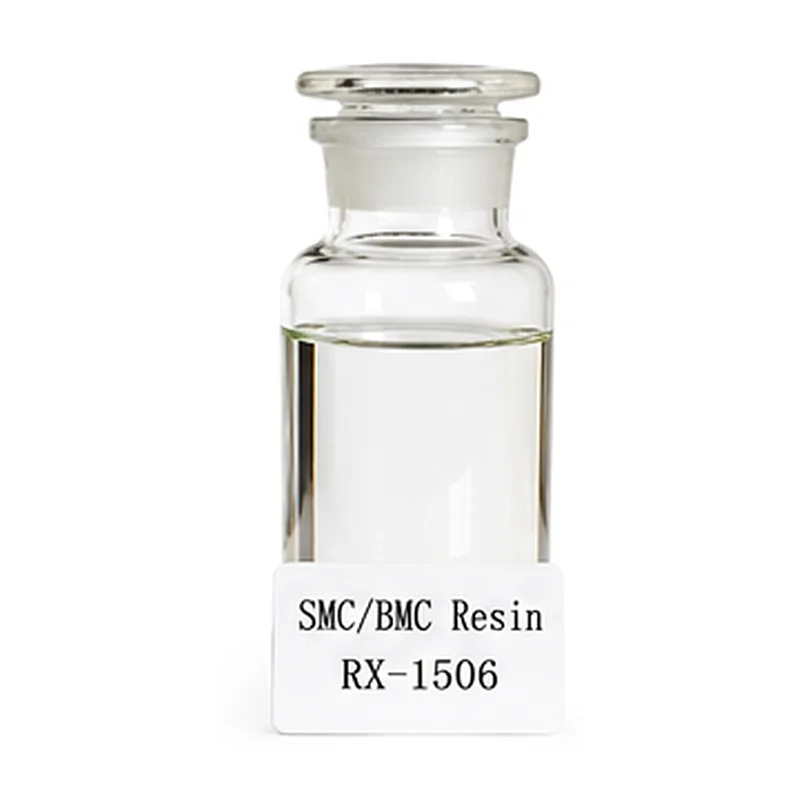
Cost per part rewards careful math. SMC carries a higher tooling investment upfront. Fast cure and short cycle times then drive your per-part cost down as volume climbs. RX-1506 SMC/BMC Resin from Changzhou Rixin Resin Co., Ltd. shows how this works. This high-performance resin offers fast cure, strong tensile and impact strength, heat resistance, stable thickening, and a Class A surface finish. Those traits shorten molding cycles and support automated compression molding. Fiberglass resin flips the equation. Low tooling cost keeps your entry price down, yet labor and cycle time keep per-part cost high. Run your own volume numbers before you choose.
SMC resin fits repeatable, high-volume work with complex shapes. Consistent fiber loading and long-term durability come built in. Fiberglass resin gives you flexibility and low tooling cost for low-volume, large, or custom parts.
Ask yourself a few questions before you decide. How many parts will you make? How complex is the shape? What surface finish do you need? Will you repair parts in the field? What budget covers tooling and cycle time? Your answers point to one material.
Both options serve real needs well. Match the material to your project, and you get solid results either way.
FAQ
Can you repair an SMC part with fiberglass resin?
No. Polyester fiberglass resin bonds poorly to molded SMC, and the patch will not hold. Use a special adhesive formulated for SMC instead. Check the material before you commit to a fix, because the repair method follows the material, not your preference.
How do you identify an unknown part in the field?
Run your hand across the surface. Smooth, uniform, marbled grey material points to SMC. Visible weave or strands you can feel point to fiberglass. A drilled edge confirms it: SMC cuts like a dense solid, while laminate may fray.
At what volume does SMC become the cheaper choice?
No single number fits every project. SMC carries higher tooling cost upfront, then fast cure and short cycles drive per-part cost down as volume climbs. Compare your tooling spend against your total part count and cycle time before you decide.
Does carbon fiber SMC change the strength comparison?
Yes. At the same weight, carbon fiber SMC offers 2–3 times higher tensile strength and stiffness than glass fiber SMC. You gain that performance without adding mass. Choose it when a part must stay light and still carry heavy loads.
How should you store and handle SMC resin?
Keep RX-1506 in a cool, dry, shaded place. Process it at 15°C–30°C with humidity below 80%, and pair it with TBPB curing agent at 1.0%–2.0%. It ships as Hazard Class 3 (Flammable), so follow the label and keep ignition sources away.